Mihaela Gligor, Agnieszka Kuczkiewicz-Fraś, Halina Marlewicz and Yana Stefanova
The ESIND Research Cluster “Indian Thought in Romantic Visions of Europe” seeks to explore a dimension of Europe’s intellectual history that has often remained in the shadows of mainstream scholarship. Although studies of European engagements with India have traditionally focused on major centres such as Britain, France, and Germany, the cluster investigates how Indian philosophical, religious, and literary ideas were received, interpreted, and adapted within the less-studied intellectual traditions of Central and Eastern Europe.
The Romantic era did not simply “discover” India. Across Europe, writers, scholars, and intellectuals used knowledge associated with India to reconsider the origins of languages, peoples, religions, and civilisations. Yet these encounters were not confined to the principal centres of European Orientalist scholarship. Through comparative regional case studies, the project aims to recover voices that have been largely overlooked in histories of Orientalism, Romanticism, and Indology.
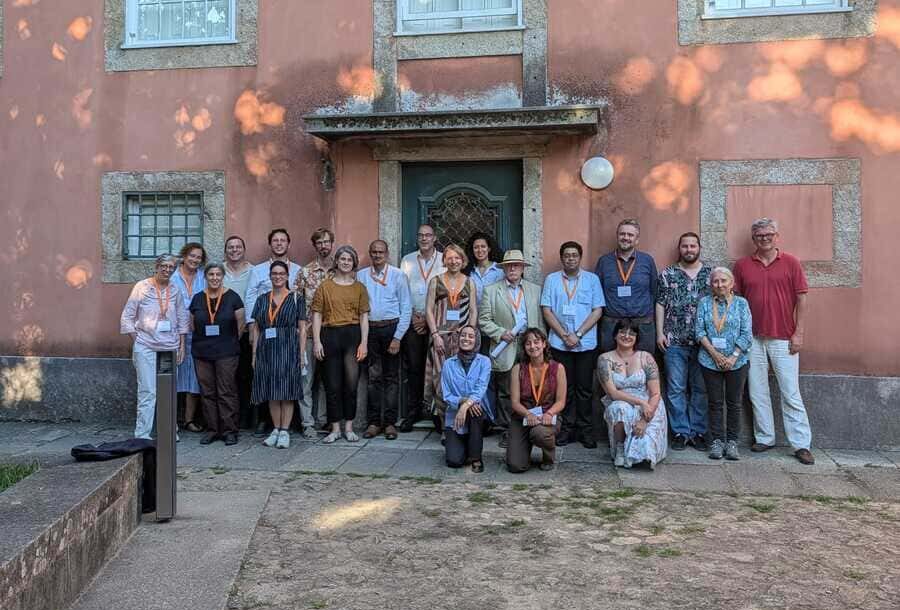
Cluster participants, so far from Bulgaria, Poland, and Romania, investigate how Indian thought entered local scholarly and cultural discourses, often becoming intertwined with broader concerns about cultural identity, historical origins, national revival, and spiritual renewal.
A recurring theme seems to be that India frequently functioned not merely as an object of scholarly interest, but as a powerful intellectual resource through which European thinkers reflected on their own societies and their place in history.
Comparative Perspectives: Bulgaria
Imagining Origins: Georgi Rakovski, India and the Uses of Antiquity
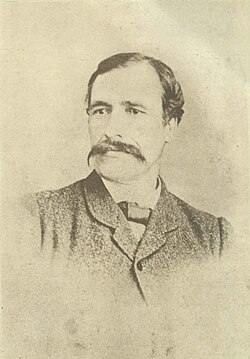
The nineteenth-century European fascination with India was also, in many ways, a fascination with origins. Across Europe, writers and intellectuals turned to Indian languages, texts, and imagined antiquity in their attempts to think about the beginnings of language, peoples, religions, and civilisations. But these ideas did not remain confined to the main centres of European Orientalist scholarship. They travelled into different intellectual and political contexts, where they could acquire rather different meanings. One such case is the Bulgarian intellectual Georgi S. Rakovski (1821–1867), whose interest in Sanskrit and the ancient past raises a deceptively simple question: what was India for Rakovski?
Rakovski is an unexpected figure in this story. Unlike many Romantic engagements with India, which centred on philosophy, religion, spirituality, or the search for ancient wisdom, his interest appears to have been shaped more strongly by language, genealogy, the origins of peoples, and historical reconstruction. In works such as Показалец (Pokazalets, “Index: A Manual on How to Seek and Find the Oldest Features of Our Life, Language, Folk Generations, Our Old Rule, Our Glorious Past, etc.”, 1859) and Ключ българскаго языка (Klyuch balgarskago yazyka, “Key to the Bulgarian Language”, 1880), he draws comparisons between Bulgarian and Sanskrit and places linguistic questions within broader attempts to reconstruct the distant past.
However, what these comparisons ultimately meant to establish is less straightforward. Were Sanskrit and India primarily linguistic and antiquarian resources for Rakovski, or did they form part of a wider attempt to rethink origins, history, and Bulgaria’s place within larger narratives of civilisation? And what did “antiquity” itself mean in this context? Was it simply a matter of chronological depth, a search for primordial origins, a source of historical authority, or something closer to the Romantic idea of an ancient world in which the beginnings of peoples and civilisations could still be recovered? Whatever the answer, the question shifts the focus from India as a source of knowledge to the uses to which knowledge about India could be put in a different intellectual context.
This makes Rakovski relevant for the broader concerns of ESIND. His case allows us to look not only at what Europeans knew or believed about India but also at what happened to ideas about India when they travelled into different intellectual environments. In Rakovski’s case, this raises another question: how, if at all, did ideas about India contribute to the ways in which he imagined Bulgaria’s place within broader European histories of peoples, languages, and civilisations? Did Indian material offer him a way of challenging or complicating the dominant historical narratives of his time? Did it allow Bulgarian history to be situated within a longer or wider story of origins?
These questions also make it useful to consider the processes through which such ideas were selected, translated, displaced, and repurposed. Knowledge associated with India could acquire different meanings when entered a new intellectual and political context. Rakovski may therefore offer a case study not simply in the transmission of knowledge but in its transformation.
A particularly interesting and promising aspect of Yana Stefanova’s research on Rakovski lies in exploring his ideas through comparison with the other figures and cases examined within the cluster. The aim would not necessarily be to establish a direct line of influence between Rakovski and particular European scholars, but to compare how different intellectuals encountered and transformed ideas associated with India for different purposes. Such a comparison could also help clarify the methodological differences between philosophical, religious, linguistic, antiquarian, and national uses of Indian materials.
This direction also extends her previous research on European encounters with Indian intellectual traditions. Although her earlier work has focused mainly on encounters with Indian philosophy and religion, Rakovski opens a different field of inquiry: the use of ideas about Indian antiquity in thinking about language, genealogy, origins, and civilisational memory. Bringing these cases into conversation can allow us to examine a broader question: how does the meaning and function of “India” change depending on the intellectual problem for which it is being used?
Therefore, Rakovski’s writings can be approached along with the European scholarship on Sanskrit, comparative linguistics, and the ancient history of peoples that was available to nineteenth-century intellectuals. Tracing the networks, concepts, and methodological parallels that connect these contexts may help situate his work within a wider history of European engagements with India, while also leaving open the question of what was distinctive about his particular appropriation.
Rather than treating Rakovski simply as an example of European Indology, his case offers a point of entry into a larger question central to the cluster: what happens to knowledge about India when it moves between intellectual traditions, disciplines, and political contexts, and what can their changing uses reveal about the intellectual problems and historical concerns of those who take them up?
Poland
Early Explorers of Indian Thought
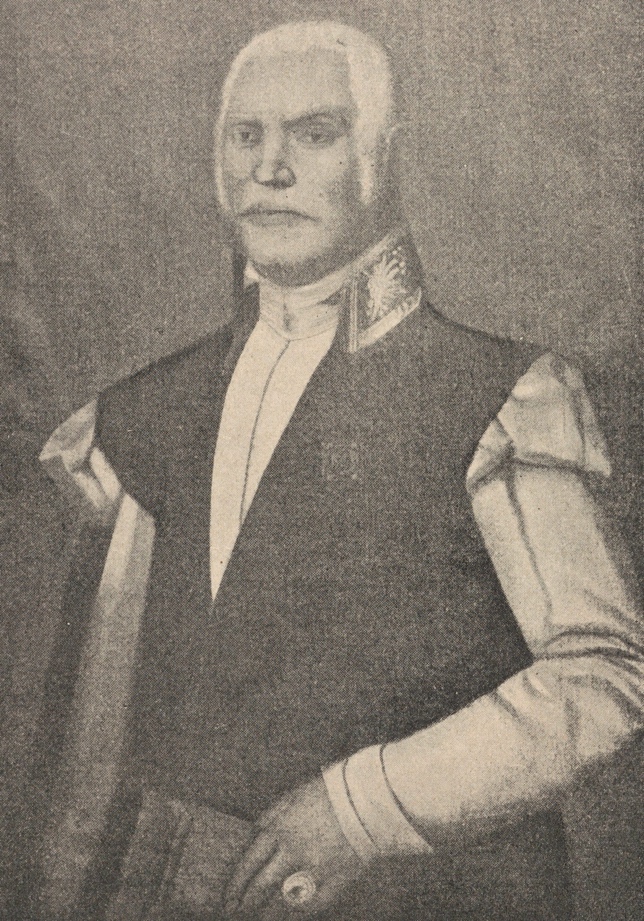
One of the central projects currently being developed within the group is Agnieszka Kuczkiewicz-Fraś’s study provisionally titled Majewski and Lelewel as the First Explorers of Indian Thought on Polish Lands. Her research focuses on two early nineteenth-century Polish scholars, Walenty Skorochód Majewski (1764-1835) and Joachim Lelewel (1786-1861), both of whom contributed to the dissemination of knowledge about India among Polish readers.
The project asks several fundamental questions: What kinds of knowledge about India were available in Polish intellectual circles at the beginning of the nineteenth century? How were Indian religion, philosophy, history, and literature represented? To what extent did Polish discussions reflect wider European intellectual trends? And how might these early scholarly efforts have influenced later Romantic engagements with India?
Majewski is particularly notable for his early interest in Sanskrit and comparative philology. In On the Slavs and Their Kin (1816), the first substantial Polish work devoted to Sanskrit language, Indian literature, and the cultural connections between India and Europe, he attempted to establish connections between Slavic and Indian peoples through linguistic and cultural comparisons. He argued that similarities in language, religion, customs and social institutions pointed to a shared historical heritage.
Although many of his conclusions reflect the speculative comparative methodologies characteristic of his era and would not be accepted by contemporary scholarship, his work nonetheless illustrates the enthusiasm generated by the emergence of Sanskrit studies in Europe. He was among the first Polish intellectuals to engage seriously with Sanskrit materials and Indo-European linguistic questions.
Joachim Lelewel, widely regarded as the progenitor of modern Polish historiography, constitutes another significant milestone in the development of historical scholarship on and about India. His History of Ancient India (1820) published four years after Majewski’s study, was one of the first extensive studies of Indian history available in Polish. It introduced readers to contemporary European knowledge about India’s past and contributed to placing India within broader discussions of world history. The significance of Lelewel’s work lies less in the originality of its conclusions than in its role as an early medium through which knowledge about India entered Polish intellectual discourse. He attempted to integrate India into universal history and portrayed ancient India as a major centre of civilisation and an important source of moral, religious, and intellectual traditions. Though the title of his study might suggest a focus on history, along with historical data, Lelewel introduced the readers also to Indian religious traditions, philosophy, social organisation, and explored the possible influence of Indian ideas on other civilisations, including the Western ones.
The works of Majewski and Lelewel were not merely compilations of Western European Orientalist scholarship but created an intellectual framework that enabled the Romantics to perceive India as one of the most important sources of religion, philosophy, and primordial wisdom of humanity.
As a research group present members, we believe that these Polish representatives may help illuminate the continuities between Enlightenment scholarship and Romantic thought. Rather than viewing Romantic interest in India as an abrupt break with earlier intellectual traditions, the Polish material may suggest a more gradual development in which philological, historical, and comparative inquiries provided foundations for later Romantic reinterpretations. This remains a working hypothesis and is part of the ongoing research agenda.