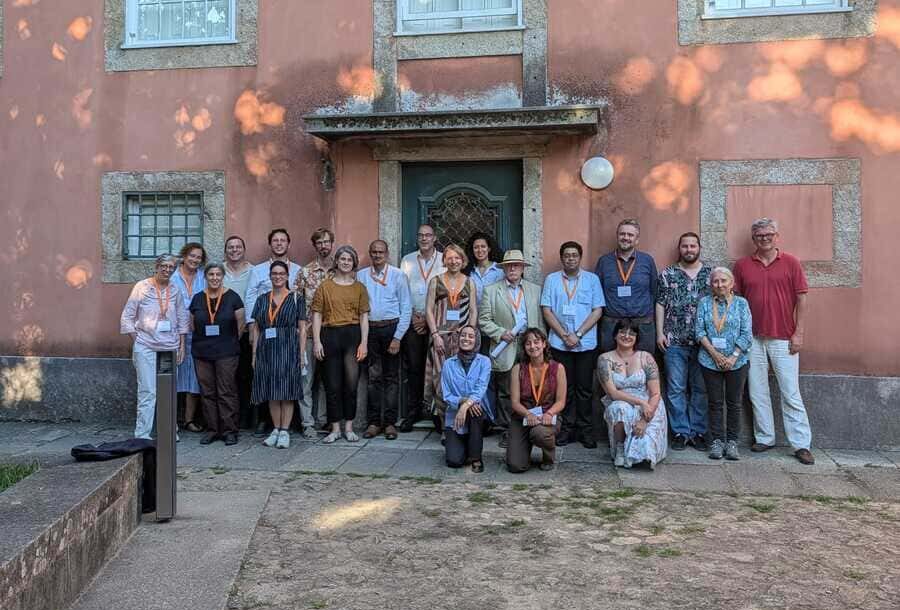
Mihaela Gligor, Agnieszka Kuczkiewicz-Fraś, Halina Marlewicz and Yana Stefanova
Aleksander Leszek Dunin Borkowski and the Polish Oriental Renaissance
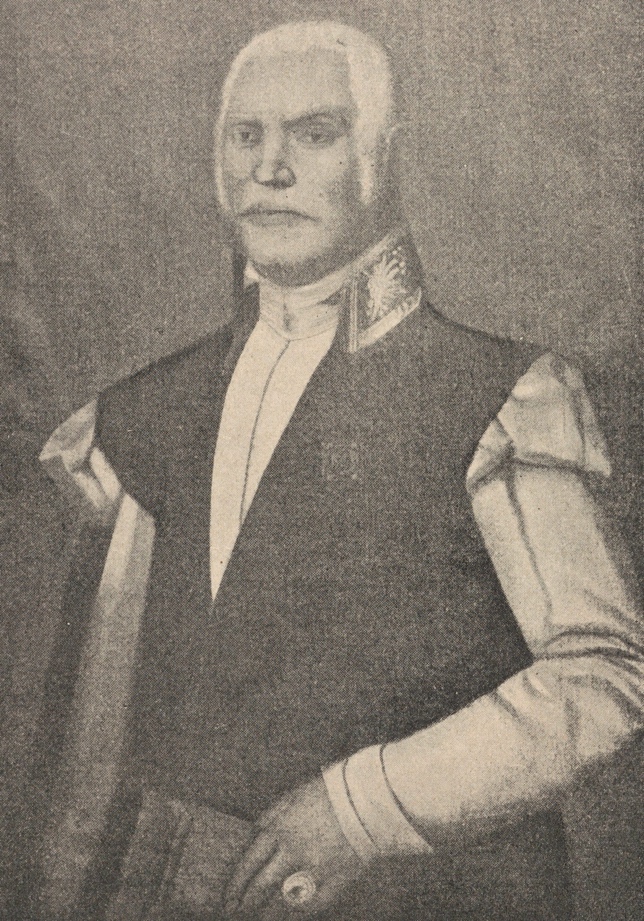
Another strand of the research cluster’s work draws on Halina Marlewicz’s research on Aleksander Leszek Dunin Borkowski (1811-1896), a Polish citizen from Lemberg (Lviv), the capital of the former Kingdom of Galicia and Lodomeria (Austrian Poland). During his times, Dunin Borkowski was better known as a politician, publicist, writer, and intellectual. Yet he developed a sustained interest in Indian literature and religion after studying Sanskrit at the University of Königsberg under Peter von Bohlen (1791-1867).
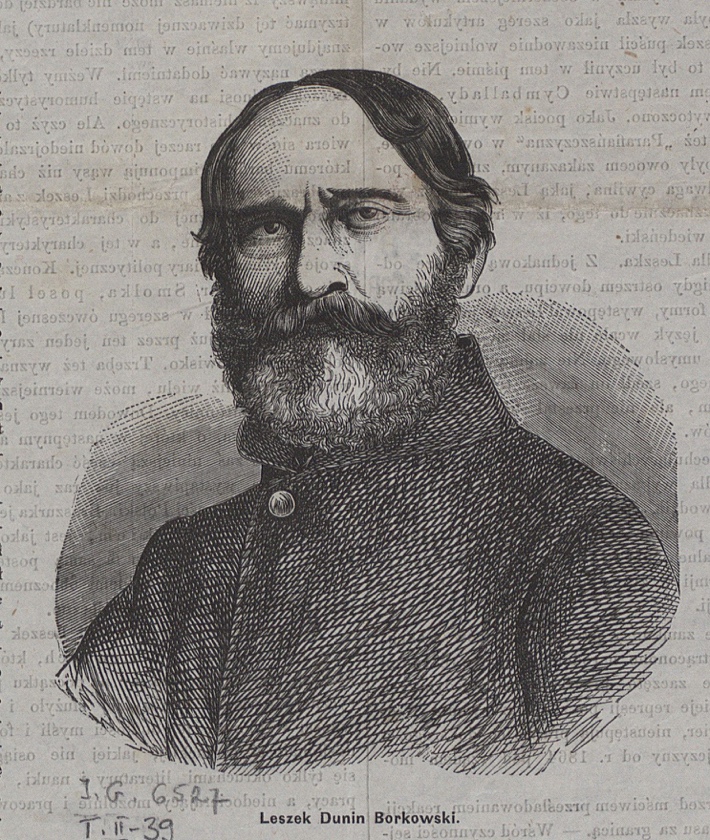
Marlewicz’s research shows that Dunin Borkowski read Indian texts not only as historical documents but as sources for broader reflections on religion, culture, and humanity. In his interpretation of Bhartṛhari’s Śatakatraya (around 5th century), he saw a union of poetry, philosophy, and religion that he associated with an idealised vision of ancient wisdom. This interpretation tells us at least as much about nineteenth-century European intellectual concerns as it does about Bhartṛhari himself.
Similarly, in On the Oldest Written Records (1850), Borkowski used the Vedas to support his own theory of the historical development of religious ideas. Influenced by European interest in India and its academic explorers such as the already mentioned van Bohlen, but also by important figures of Bengal Renaissance movement such as Rammohan Roy, he argued that early Vedic religion preserved evidence of an original spiritual unity underlying later religious developments. For the primary aims of the cluster’s research, the extent to which this interpretation faithfully represents Vedic traditions is of secondary significance relative to its evidentiary value in demonstrating how nineteenth-century Polish intellectuals mobilised “India” as an interpretive framework for addressing universal questions concerning religion, civilisation, and human history.
Borkowski is therefore approached less as an authority on India and more as a case study illustrating how India could become incorporated into local intellectual projects. His writings seem to demonstrate how references to India were adapted to concerns that originated in European debates about modernization, spirituality, culture, political oppression and historical change.
Comparative Perspectives: Romania
Beyond Romanticism? Teofil Simenschy and the Afterlives of European Encounters with Indian Thought
Mihaela Gligor’s proposed project examines the Romanian scholar and translator Teofil Simenschy, whose translations and studies of Indian philosophical and religious texts played an important role in introducing Indian thought to Romanian audiences. His work represents another example of how intellectual mediation between India and Europe occurred far beyond the major centres of Orientalist scholarship.
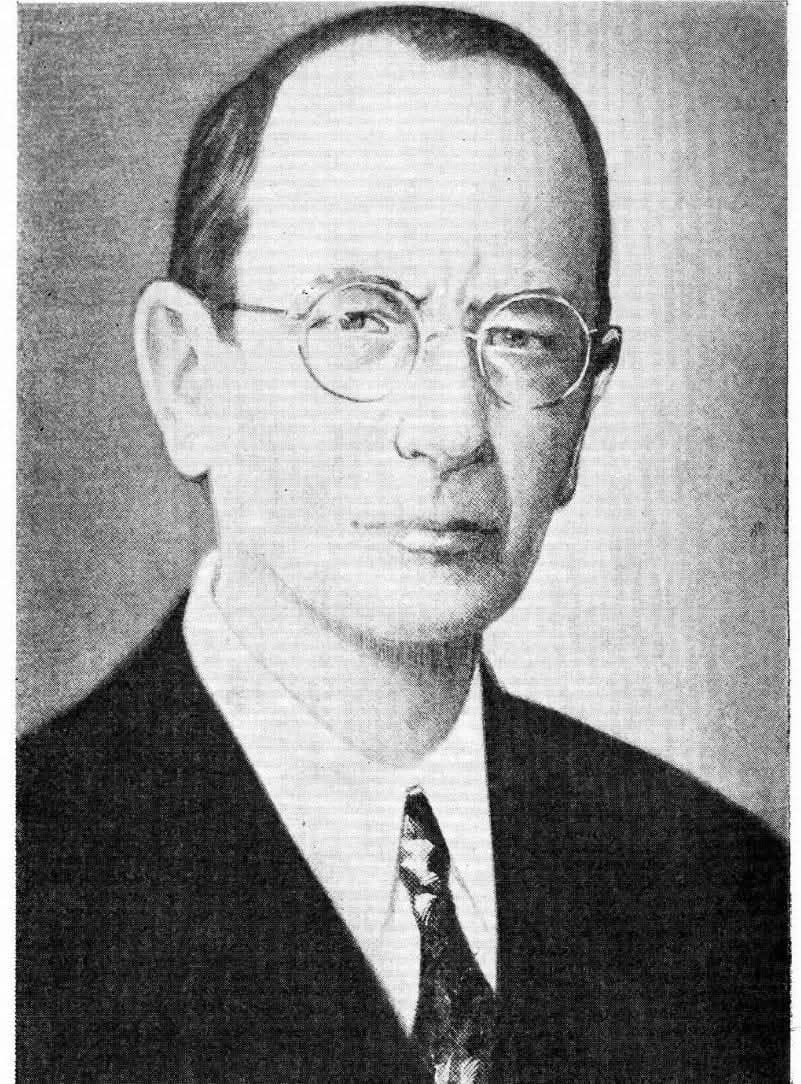
The proposed Romanian contribution introduces a productive chronological challenge to the ESIND Research Cluster. Theofil Simenschy (1892–1968) belongs to the twentieth century, whereas Indian Thought in Romantic Visions of Europe is principally concerned with Romanticism and its immediate intellectual contexts. His inclusion, therefore, does not rest on chronology alone.
On the evidence currently available, Simenschy’s relevance to the cluster is plausible and potentially substantial, but not yet fully demonstrated. His work unquestionably belongs to the history of Romanian Indology and the academic mediation of ancient Indian literature. What remains to be established is the more specific connection between that work and the cluster’s interest in Romantic visions of India.
Simenschy’s philosophical essays provide perhaps stronger point of connection with the cluster. His studies addressed such subjects as ancient conceptions of destiny, Hindu ethics, Indian and Greek accounts of the origin of the universe, and the Supreme Being in Hindu mysticism. These themes suggest that he did not treat Sanskrit exclusively as an object of linguistic analysis. He also approached Indian texts as sources for comparative reflection on ethics, cosmology, metaphysics, and religion.
The comparison of India and Greece is especially relevant. European Romantic and post-Romantic interpretations often positioned India in relation to classical antiquity, sometimes seeking a common Indo-European past and sometimes contrasting Indian wisdom with the Greek foundations claimed for European civilization. Simenschy comparisons may belong to the intellectual afterlife of these debates. Yet the thematic similarity alone is insufficient to prove continuity. Research would need to establish how the comparisons were constructed, what categories organized them, and what hierarchy, if any, Simenschy established between the Indian and Greek traditions.
This line of inquiry also accords closely with the cluster’s interest in selection, translation, appropriation, displacement, and repurposing. Simenschy did not receive Indian texts without mediation. Romanian publications may therefore be studied as another stage in a layered process: Indian texts were edited and interpreted within European Indology, selected by Simenschy, translated into Romanian, and reframed for a new readership.
Simenschy’s dates create a real boundary issue. Unlike Majewski, Lelewel, Borkowski, or Rakovski, he cannot be presented as a participant in Romantic intellectual culture. Calling his work a “Romantic vision of India” without further evidence would be historically misleading. His contribution would be most convincing if framed as a study of the afterlives, institutionalization, or transformation of interpretative models that emerged during the Romantic and post-Romantic European encounter with India.
Placed alongside the Polish and Bulgarian projects, the Romanian case could illuminate a movement from exploratory and frequently speculative nineteenth-century appropriations towards the institutional mediation of Indian traditions in the twentieth century. Majewski used Sanskrit in reconstructing proposed relations between Indians and Slavs. Borkowski turned to Indian literature and Vedic religion in search of ancient wisdom and a history of religious consciousness. Rakovski appears to have mobilized Indian antiquity within linguistic, genealogical, and national narratives. Simenschy, by contrast, may represent the point at which engagement with India became embedded in academic teaching, translation, textual scholarship, and comparative philosophy.
This contrast should not be expressed as a simple progression from error to truth or from amateurism to professional scholarship. Twentieth-century academic Indology also operated through inherited European classifications and interpretative assumptions. The Romanian project might therefore examine both disciplinary change and conceptual persistence. Which nineteenth-century questions survived within Simenschy’s scholarship? Which were reformulated? Which disappeared? What new meanings did Indian texts acquire when translated for a Romanian academic readership?
Towards a More Plural History of Europe and India
The ESIND cluster does not begin with the assumption that there was a single European response to India. Rather, it explores the possibility that different European intellectual contexts generated distinct interpretations of Indian texts, traditions, and ideas. The examples discussed shortly here suggest that encounters with India could serve different purposes in different settings: scholarly, philological, philosophical, religious, political, or cultural.
By bringing together research on Poland, Bulgaria, Romania, and potentially other regions, the cluster aims to contribute to a more nuanced history of European engagement with India. Its purpose is not to demonstrate the influence of India on Europe in any simple sense, but to understand how particular European thinkers used India as a reference point in constructing their own visions of history, identity, culture, and civilization.
In this respect, the project seeks to recover not forgotten “truths” about India but overlooked conversations about India that unfolded in Europe’s intellectual borderlands. These conversations may ultimately help us better understand both the diversity of European Romanticism and the complex ways in which ideas travel across cultures
The cluster warmly invites ESIND members whose research resonates with this initiative to join the developing conversation. We would be especially interested in hearing from colleagues working on lesser-known or even overlooked European encounters with Indian thought, neglected intellectual figures, regional networks of mediation, or connections between India and Romantic-era debates about language, religion, history, and cultural identity. New case studies and comparative perspectives will be essential to developing a more diverse account of the intellectual exchanges between India and Europe.