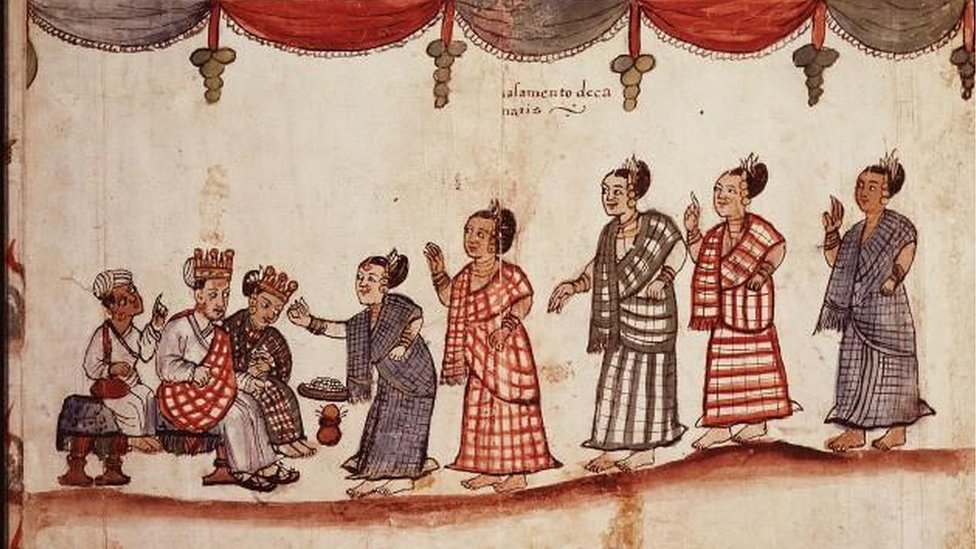
In this interview, Yana Stefanova, an Assistant Professor at the Institute of Philosophy and Sociology at the Bulgarian Academy of Sciences, discusses her research on early modern intellectual encounters between Europe and India. Drawing on her previous work regarding the translation of Buddhism into Chinese through Taoist terminology, Stefanova examines how European missionaries, specifically Roberto de Nobili during the Madurai mission, attempted to interpret Indian philosophical and religious traditions using familiar Christian concepts. This process involved complex negotiations in which “misunderstandings,” or what she refers to as “aberrant decoding” after Umberto Eco, generated new meanings and shaped Europe’s foundational conceptual frameworks of India. Stefanova focuses on this early modern period and contextualises the historical groundwork that preceded the later, well-known 19th-century philosophical reception of India by thinkers such as Schopenhauer and Nietzsche.
1) Can you present yourself and your research, particularly how your earlier work on the translation of Buddhism into Chinese through Taoist terminology led to your current interest in India?
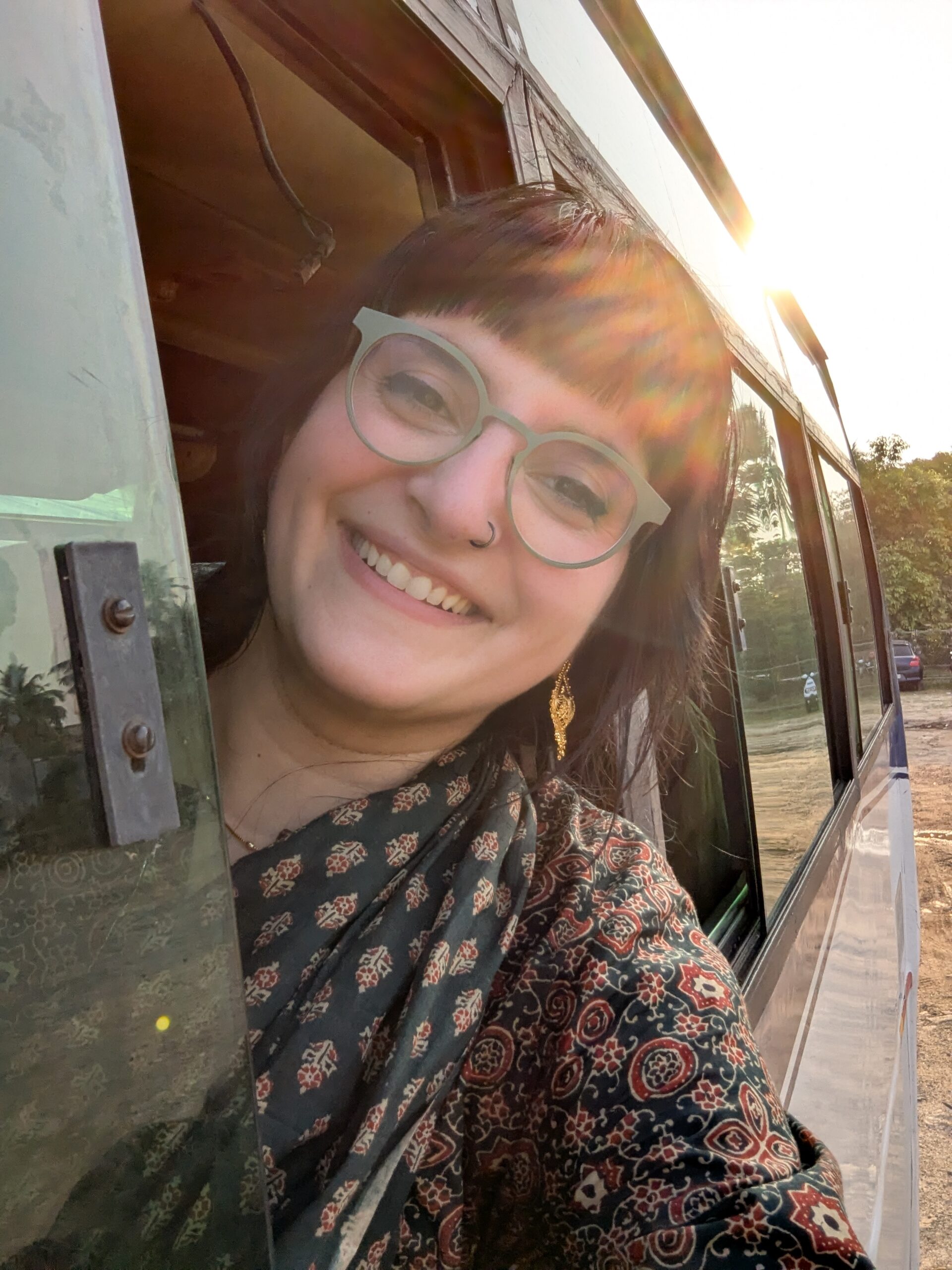
I am Yana Stefanova, an Assistant Professor at the Institute of Philosophy and Sociology at the Bulgarian Academy of Sciences. My academic background is in philosophy, and my research has gradually developed around the ways in which ideas and concepts travel between different intellectual and cultural traditions.
My earlier work focused on the translation of Buddhism into Chinese, particularly the use of Taoist terminology to make Buddhist ideas more accessible to a Chinese audience. What initially interested me was the problem of translation: how do you explain concepts from one intellectual tradition using the language of another? Sometimes there is no direct equivalent, but perhaps the more interesting – and more difficult – situation is when there appears to be one. A familiar term can seem to offer a ready-made translation, even though it carries rather different meanings and assumptions in the two traditions. In such cases, the translation may create an impression of understanding while actually obscuring important differences. The more I explored this problem, the more interested I became in what happens to concepts when they cross intellectual and cultural boundaries.
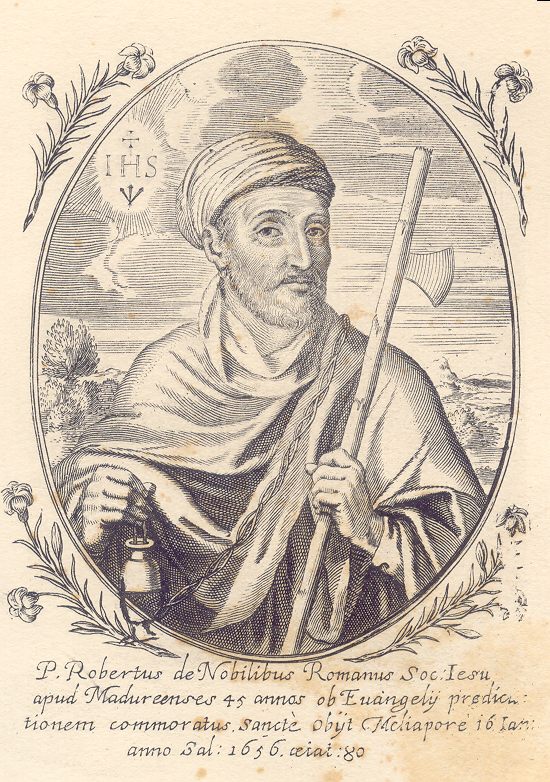
This question eventually led me towards the encounters between Europe and India. My current research focuses on the early modern period, particularly the work of Roberto de Nobili and the Madurai mission. I am interested in how European missionaries approached Indian philosophical and religious traditions, how they tried to interpret them through concepts familiar to European Christianity, and how these encounters sometimes produced unexpected forms of adaptation and misunderstanding.
For me, the connection between my earlier work on China and my current research on India is therefore quite natural. In both cases, I am interested in what happens when two intellectual worlds meet and try to understand one another. I find it particularly fascinating that this process is rarely straightforward: ideas are translated, negotiated, reinterpreted and sometimes transformed in ways that may not have been intended by those involved.
2) Your current work focuses on early modern encounters, specifically Roberto de Nobili and the Madurai mission. What specific processes of interpretation or misunderstanding stand out to you in this historical moment?
I am interested in Roberto de Nobili not so much as a missionary figure in himself, but because his experience in Madurai offers an unusually rich example of the complexities involved when two intellectual and cultural worlds try to understand one another.
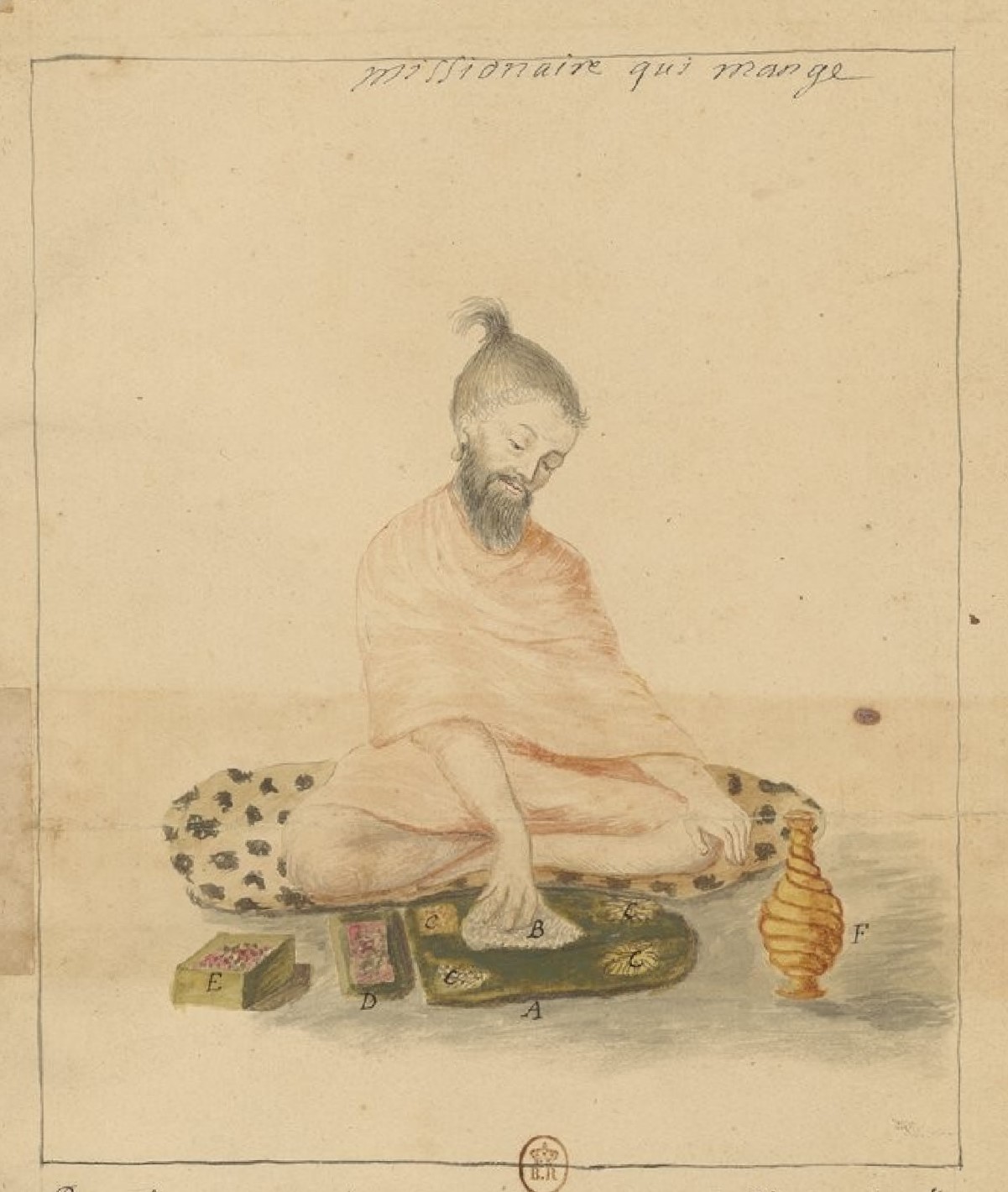
What makes this case particularly interesting is that we are not necessarily dealing with a simple opposition between someone who misunderstands another culture and someone who is being misunderstood. De Nobili made a conscious effort to understand the society in which he was working and to adapt his approach accordingly. He studied local languages and traditions, adopted forms of dress and behaviour associated with particular social and religious identities, and tried to distinguish between what he understood as cultural or social practices and what he considered matters of religious belief. There was a genuine attempt to find common ground, but that does not mean that his interpretations were necessarily accurate, or that the results of his efforts were always what he intended.
This is precisely what I find fascinating about the episode. When we approach another culture, we inevitably do so with concepts and assumptions formed by our own intellectual background. Even when we are trying to be open-minded, we may end up interpreting what we encounter in ways that make sense to us but do not necessarily correspond to how the other side understands itself. And the process works in both directions: the people encountering De Nobili also had to make sense of who he was and what he represented.
For me, the Madurai mission is therefore a particularly good case study of the gap between intention, interpretation and reception. It allows us to look beyond the question of whether a particular encounter was successful or unsuccessful, and to examine how understanding is actually negotiated, where it breaks down, and what can emerge from those attempts – including consequences that nobody involved may have anticipated.
3) Drawing from your approach of examining “minor details” and “terminological choices,” can you share an example from the Madurai mission where a small linguistic or conceptual translation had a surprisingly significant afterlife in the development of ideas?
I would say that this is precisely what I am still looking for! I don’t think I have reached my eureka moment yet, and I would rather not force an example simply to illustrate a theoretical point.
One of the things I find most interesting about this kind of research is that the significance of certain details often becomes visible only when you follow their development over time. A terminological choice that initially seems quite practical – a way of making an unfamiliar concept understandable to a particular audience – may turn out to carry assumptions or meanings that extend well beyond its original context. But to establish that, you need to trace what happens to it, how it is received and whether it is taken up or transformed in later accounts.
So perhaps my answer is still a work in progress. I’ll let you know when I find my eureka moment!
4) Coming from a classical philosophical background, your initial reference points for Europe’s encounter with India were much later thinkers like Schopenhauer, Nietzsche, and Heidegger. How does studying the early modern “beginnings” of these encounters reshape our understanding of those later philosophical interpretations?
I find this question particularly interesting because, in a way, it gets to the reason why I decided to focus on the early modern period in the first place. Coming from a classical philosophical background, I was initially familiar with the much later European interpretations of Indian thought. But I gradually felt that I was approaching the story from the wrong end. I wanted to understand what had happened before that, rather than simply arrive at the point where Indian philosophy had already become an object of interest for major European thinkers.
I think my earlier work on Buddhism in China played an important role in this. Today, people are often more familiar with Zen Buddhism, the Japanese development of the Chinese Chan tradition, but I find the story of how Buddhism first entered China, how it was understood through Taoist terminology, and how these encounters gradually developed into something quite different just as fascinating. Once you start following that process, you begin to see the people, the circumstances, the conceptual negotiations and the misunderstandings that made later developments possible. Things no longer happen ‘just because’.
I wanted to approach the European encounter with India in much the same way. In the Bulgarian philosophical context, the earlier period is particularly understudied, and there is often a tendency to move directly to the nineteenth century, where the more familiar philosophical reception takes place. But I find it difficult to jump to that stage without knowing what came before. It would feel a little like joining a conversation halfway through and assuming that everything said earlier was somehow irrelevant.
I don’t think studying the early modern period necessarily gives us a new interpretation of Schopenhauer or Nietzsche straight away. Rather, it gives us a much fuller historical context in which to understand why certain ideas became available, how India had already been represented and interpreted in Europe, and what intellectual groundwork preceded the later enthusiasm for Indian philosophy. In a sense, I want to set the stage and get to know the players before focusing on the best-known act of the play.
5) In the context of early modern Europe and India, to what extent did these misunderstandings actively create new concepts or meanings rather than distorting existing ones?
I think misunderstandings can play a much more active role in cultural and intellectual encounters than we sometimes give them credit for. We tend to think of translation as an attempt to transfer an existing meaning from one language or intellectual tradition into another, and to judge the result according to how accurately this has been achieved. But I am not sure that this tells us the whole story.
This is where I find Umberto Eco’s concept of aberrant decoding particularly useful. A message is encoded within a certain cultural and intellectual framework, but the person receiving it may decode it through a rather different one. The resulting interpretation can be quite far removed from what the original sender intended, without necessarily being meaningless or arbitrary. It makes sense within the recipient’s own frame of reference, even if it does not correspond to the meaning originally intended.
When we apply this perspective to the early modern encounters between Europe and India, we can begin to see these misunderstandings not simply as mistakes, but as part of the process through which new meanings were produced. European missionaries encountered Indian concepts and practices through their own philosophical and theological frameworks. They tried to establish points of comparison, recognised familiar ideas in unfamiliar contexts, and sometimes interpreted what they encountered in ways that made sense within their own intellectual world but did not necessarily correspond to the original meanings.
The interesting question, then, is what happens to those interpretations afterwards. They can be repeated, adapted and incorporated into new accounts of India, gradually acquiring a significance of their own. In that sense, an interpretation that began as a misunderstanding can become part of the intellectual history of the receiving culture.
At the same time, I would not want to romanticise misunderstanding or suggest that every distortion is somehow creative or valuable. We still need to distinguish between what was meant in the original context, what the recipient understood, and what new meanings emerged from the encounter. For me, the most interesting questions lie precisely in the relationship between these different levels. Rather than treating misunderstanding simply as an obstacle to understanding, we can examine how it sometimes becomes one of the ways in which new intellectual possibilities emerge.
6) How does the image of India emerge from these early modern encounters, and how did these initial European translations of Indian concepts begin to frame the subcontinent for the broader Western intellectual world?
I think the first thing to remember is that there was never just one European image of India. Different travellers, missionaries, scholars and other observers approached the subcontinent with different interests and expectations, and what they described was inevitably shaped by the particular encounters they experienced.
What interests me is that these accounts were not simply descriptions of an already existing reality. They were also acts of interpretation. When Europeans encountered Indian religious and philosophical traditions, they tried to make sense of them through concepts they already knew. They looked for familiar categories, established comparisons with their own traditions, and translated unfamiliar ideas into a language that their European readers could understand. Sometimes this made Indian thought more accessible; sometimes it obscured important differences or produced interpretations that said as much about European assumptions as they did about India.
I think this is particularly important when we consider how these accounts circulated. An interpretation initially produced in a very specific context – perhaps a missionary encounter, a translation or a description of a particular community – could eventually become part of a much broader European understanding of India. The original circumstances might be forgotten, while the interpretation itself continued to circulate and acquire authority. In this way, particular encounters could contribute to more general representations of the subcontinent.
I would therefore see the early modern period as one of the stages in which the conceptual frameworks through which India would be understood in Europe were being formed. These frameworks were selective and sometimes misleading, but they were also historically consequential. And I think that is why it is important to study the encounters themselves, rather than looking only at the representations that eventually emerged from them.
7) What connections do you see between your specific research and the broader goals of ESIND?
I see my research as fitting quite naturally into the broader goals of ESIND, particularly its interest in understanding how European representations of India developed over time. My own work focuses on a relatively early stage of this history, when European understandings of Indian thought and society were still being formed through encounters, translations and attempts at interpretation.
What I find particularly valuable about ESIND is that it brings together researchers approaching this subject from different disciplines and perspectives. The image of India in Europe was not shaped by philosophical texts alone, nor by religious accounts, travel writing or visual representations in isolation. These different forms of knowledge and representation interacted, sometimes reinforced one another and sometimes produced quite different images of the same place and its traditions.
My contribution is to look at some of these early encounters from a philosophical perspective, paying particular attention to the conceptual processes involved: how unfamiliar ideas were interpreted through existing European categories, how meanings changed in translation, and how these interpretations could eventually become part of broader representations of India.
I also appreciate that ESIND encourages us to look beyond individual national or disciplinary histories. The European encounter with India was not a single, uniform process, and I think understanding its complexity requires us to compare different contexts, approaches and intellectual traditions. For me, being part of this network is an opportunity not only to contribute my own research, but also to see how it connects with questions being explored by colleagues working on other periods, regions and types of sources.
8) Can you suggest a reading or a movie that could allow the reader to approach this topic, whether the Madurai mission, Roberto de Nobili, or the broader theme of early intellectual translations between Europe and India, for the first time?
I would actually recommend “A Pearl to India,” because it was one of the books that first made this story come alive for me. There is a particular passage describing Roberto de Nobili’s arrival in Madurai that has stayed with me ever since. It describes the landscape through which the missionaries travelled, from “a barren sandy plain” to paths bordered by “immense banyan trees.” But what really caught my imagination was the description of the extensive water tanks scattered across the countryside. I could almost see them glimmering in the sunlight, and found myself thinking about the ingenuity involved in creating and maintaining these reservoirs, which stored rainwater for the dry season. This image was followed by another remarkable detail: the local bird-catchers who would use inverted water-pots with eye-slits, moving underwater to catch birds by their legs. And then, after this journey through the countryside, the missionaries finally enter Madurai, vibrant and bustling.
The level of detail is extraordinary. You almost feel as though you are travelling alongside the missionaries and seeing the landscape through their eyes. What I particularly enjoy about the book is that, at times, it reads almost like a classical nineteenth-century novel – Balzac comes to mind – rather than a conventional historical account. It draws you into a world that initially seems so distant and unfamiliar, and makes you curious about the people who inhabited it and the encounters that took place there.
That was actually what first captivated me and made me want to investigate the story further. I think it is also a good starting point for someone approaching the subject for the first time. Before getting into the more specialised discussions about missionary strategies, religious traditions or philosophical interpretation, it allows you to imagine the historical setting and get a sense of the human encounter behind all those questions.
Ultimately, I think these encounters remind us that understanding another intellectual world is never a straightforward process – and that there is still much to discover in tracing how that understanding was attempted, negotiated and transformed. Perhaps this is also why I am drawn to the human stories behind these encounters. The transmission of ideas is, after all, a form of human interaction. It is rarely neat or predictable; it happens through individual experiences, choices, assumptions and sometimes misunderstandings. I find that middle ground, where ideas are still being worked out and meanings are not yet settled, particularly fascinating. It makes the history feel less distant, and much more human.
Yana Stefanova was interviewed by Giuseppe Resta on 2 November 2026