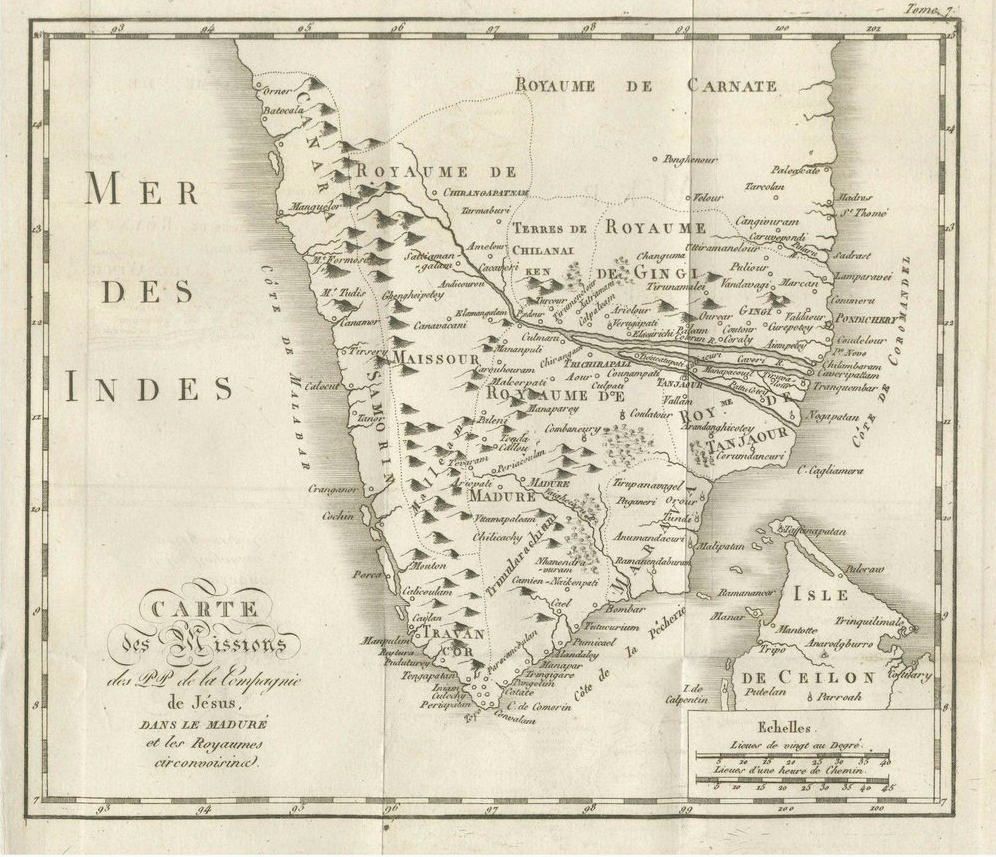
ESIND workshop entitled “My First Time in India – Places, Peoples, Impression and Stereotypes at the First Encounter”, organized by Marianna Ferrara (Università Sapienza di Roma) and Igor Spanò (Università di Palermo).
Palermo, 6-7 February, 2026
First Impressions Matter: Europeans’ Manifold Encounters with India
For two days, the magnificent Antonio Pasqualino International Puppet Museum (Museo Internazionale delle Marionette Antonio Pasqualino), located in the heart of Palermo, Sicily, generously hosted an international group of scholars from the ESIND COST network, as they discussed the ways in which Europeans from a wide array of backgrounds first responded to India over the centuries.
The choice of Palermo as the host city was far from incidental. Historically situated at the crossroads of Mediterranean routes, the city has long been shaped by successive cultural, religious, and political encounters – from the Arab and Norman periods to Spanish and other European influences. As such, Palermo itself embodies a layered history of contact, translation, and reinterpretation. Holding a workshop devoted to ‘first encounters’ in such a stratified urban context subtly reinforced our central themes of mobility, exchange, perception, and transformation. The urban landscape itself became a reminder that places are never neutral containers of experience, but active filters through which encounters are mediated and interpreted.
The Museo Internazionale delle Marionette Antonio Pasqualino provided an equally meaningful setting. Located in the historic centre, near Palazzo Butera, the museum is dedicated to puppet and storytelling traditions from across the world. Surrounded by pupi from diverse Sicilian traditions and the finest puppet traditions from India, Sri Lanka, Korea and Turkey, not to mention Indonesian Wayang Kulit, Cambodian Sbek Thom and Japanese Ningyo Johruri Bunraku, amongst others, we were able to keenly appreciate the importance of bringing together a wide array of European accounts from many different language traditions, many of which had never been translated into English before. In a workshop that aimed to reflect on what first-time visitors to India saw, heard, felt, and described – from cities and landscapes to rituals, bodies, material culture, and social practices – being surrounded by narrative traditions from different continents offered a powerful and tangible parallel. In this sense, the venue did not simply host our discussions; it actively framed them, offering a material and symbolic space in which to reflect on the ways in which ‘India’ has been perceived, imagined, and narrated in Europe over time. We were gathering new materials for future comparisons in a long-standing field overshadowed by colonial and post-colonial analyses. Despite Orientalist tropes cropping up in various guises, it was an intellectually and experientially enriching experience.
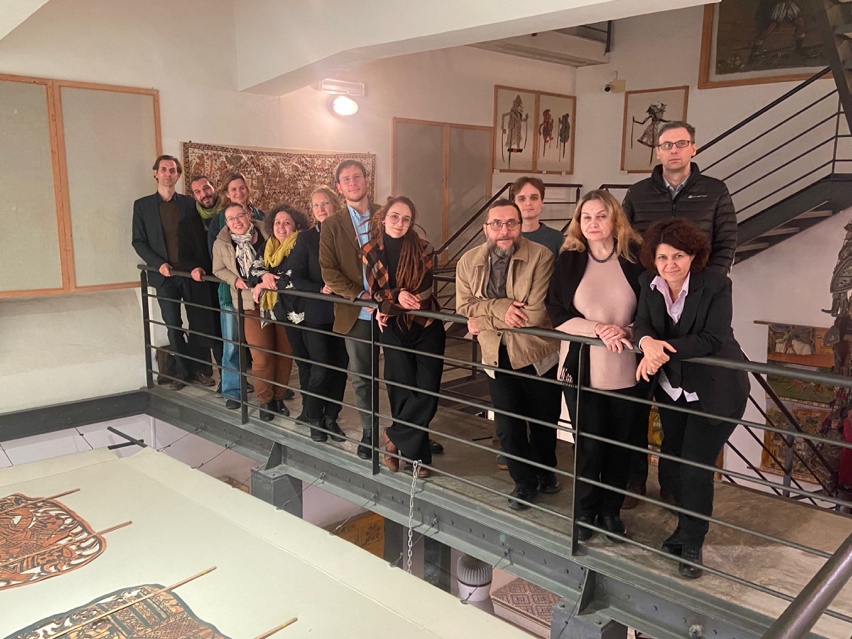
Our contributions focused on the moments of first contact and aimed to analyse how India was perceived emotionally, sensually, visually and intellectually by European protagonists from different cultural, linguistic, social and religious contexts from the Middle Ages to the 20th century. The idea was to contextualise, compare and contrast these views over time and from a variety of disciplines. We aimed to identify continuities and shifts in their perceptions while critically probing the underlying structures of feeling and seeing. One interesting part of the debate revolved around trying to better understand the pull that ‘India’ exerted and continues to exert on European travellers, be it traders, missionaries, Indologists, diplomats, translators, or artists. What propelled the Lithuanian Antanas Poška (1903–1992) to jump on his motorbike in November 1929 and set out from Kaunas, finally landing in Bombay several months later, where he then studied at the Bombay University, and later at Calcutta University? What prompted the Flemish writer and globetrotter Aster Berkhof, two decades later, to embark on a whirlwind tour of India and produce an ostensibly ‘comprehensive’ narrative of his experiences, which became one of the most influential accounts of India in the Low Countries at the time? Or, how did the Slovak Elena Androvičová (1924–1997) end up as an expert technical translator in Ranchi, giving us one of the best examples of romanticised India penned by a woman from a Socialist country from the 1970s? Motivations, no doubt, were many, as were the networks connecting Europe and India, and which enabled these travels and encounters at any one given period. Throughout the 20th century, India never seemed to be far from the European imagination, whether through Esperanto circles, theosophists, dance troupes, literary circles, scholarly connections, or Catholic global networks.
Of course, none of these encounters were ideologically neutral or unmotivated. Certainly, when 15th– and 16th– century Italian travellers wrote about weather, spices, and goods upon landing, this was reflective of their own interests, which were enabled by the existing trading routes and empires of the time. However, their joint fascination with Hindu burning rites and vegetarianism in their accounts defies any direct explanation. When missionaries wrote about false gods and languishing heathens in their travel narratives, their appreciation of the ‘new homeland’ was predictably influenced by their pre-existing Christian notions and beliefs. Nevertheless, new textual evidence suggests a broader set of responses even from within apparently monolithic ideological camps. Some narratives of Slovene female missionaries, for example, demonstrate an enviable openness towards an unknown culture, rendering any overly simplistic picture untenable. The gender question was discussed throughout. 20th-century female voices were given as much representation as their male counterparts. However, in the uneven terrain of female representations of India, it became clear that, when women’s suffering is presented as evidence of cultural failure, and authors fail to engage critically with history and local agency, even a radical feminist philosopher and theologian such as Mary Daly (1928–2010) can quickly become a mouthpiece for some of the worst imperialist stereotypes of the likes of Katherine Mayo (1867–1940), whom she took uncritically as her ‘mentor’. Moreover, Mary Daly’s first encounter with India was purely textual. She had never set foot there herself.
Amidst the plethora of Orientalist clichés that are still prevalent in European depictions of India, it was refreshing to encounter alternative representations. Otakar Pertold (1884–1965), a leading Czech Indologist, acknowledged a disconnect between ‘objective’ academic knowledge of India, particularly its caste system, and the realities he encountered on the ground as early as a century ago. This raised some crucial questions about the presumption of knowledge and the consequences of reporting experience as fact. Indeed, from damning accounts to romantic outbursts, from preconceived fabrications to surprising narrations, the diverse narratives revealed an astonishing ease with which personal observations and experiences were passed on as ‘truths’ and ‘facts’, veering off into moral indignation or hyperbolic praise, as the case may be. Few examples displayed an awareness of the limitations of one’s knowledge of distant lands and their peoples, particularly in relation to the first actual encounters. Subsequently, it was all the more interesting to observe the effects of long-term exposure to Indian realities on the workings of the European imagination. Among those who had moved to India on a more permanent basis, one could find anything from an unwillingness to embrace change to radically altered perceptions. These perceptions were often grounded in meaningful personal relationships and a deepened understanding of the country and its people. Scholars discussed, amongst others, Alice Boner (1889–1981), a Swiss sculptor and painter who first visited India in 1930 and later spent over forty years at Assi Sangam on the Ganges in Varanasi, as well as the art historian and photographer Gritli von Mitterwallner (1925–2012), who became a renowned professor of Indology. A better-known example of a woman who devoted much of her life to India is that of Margaret Noble (1867–1911), also known as Sister Nivedita.
Altogether, we thoroughly enjoyed two full days of vibrant discussion in an unforgettable setting. This left us determined to collect as many European accounts of first impressions of India as possible for an upcoming anthology of English translations. Our aim is to showcase a variety of voices and experiences as well as different narrative strategies over time, while creating a new archive that will facilitate in-depth, comparative analysis in the near future.
All ESIND members are encouraged to submit translations of first encounter narratives for the anthology and the digital platform.
Ana Jelnikar, Marianna Ferrara, Jolita Zabarskaite