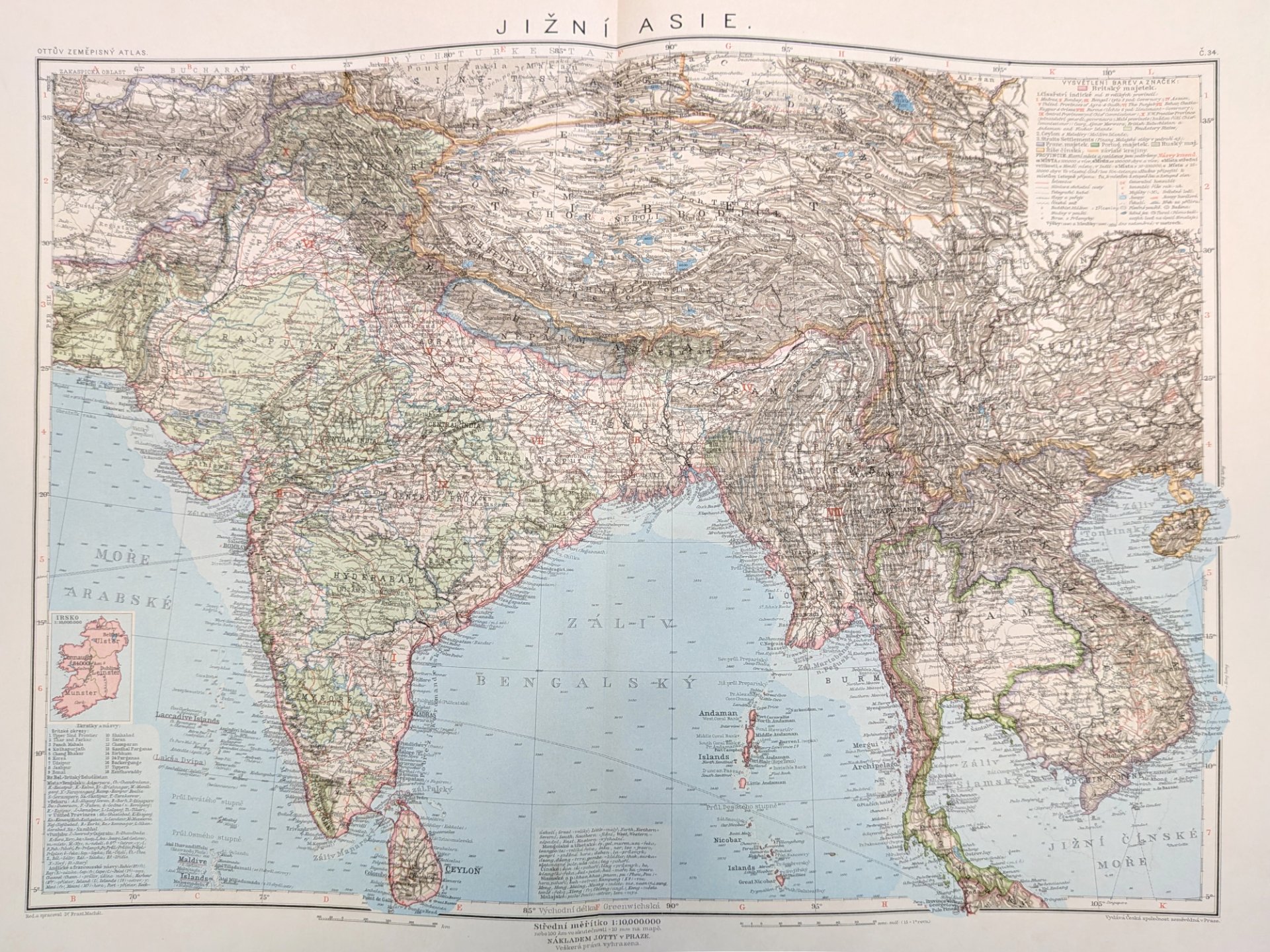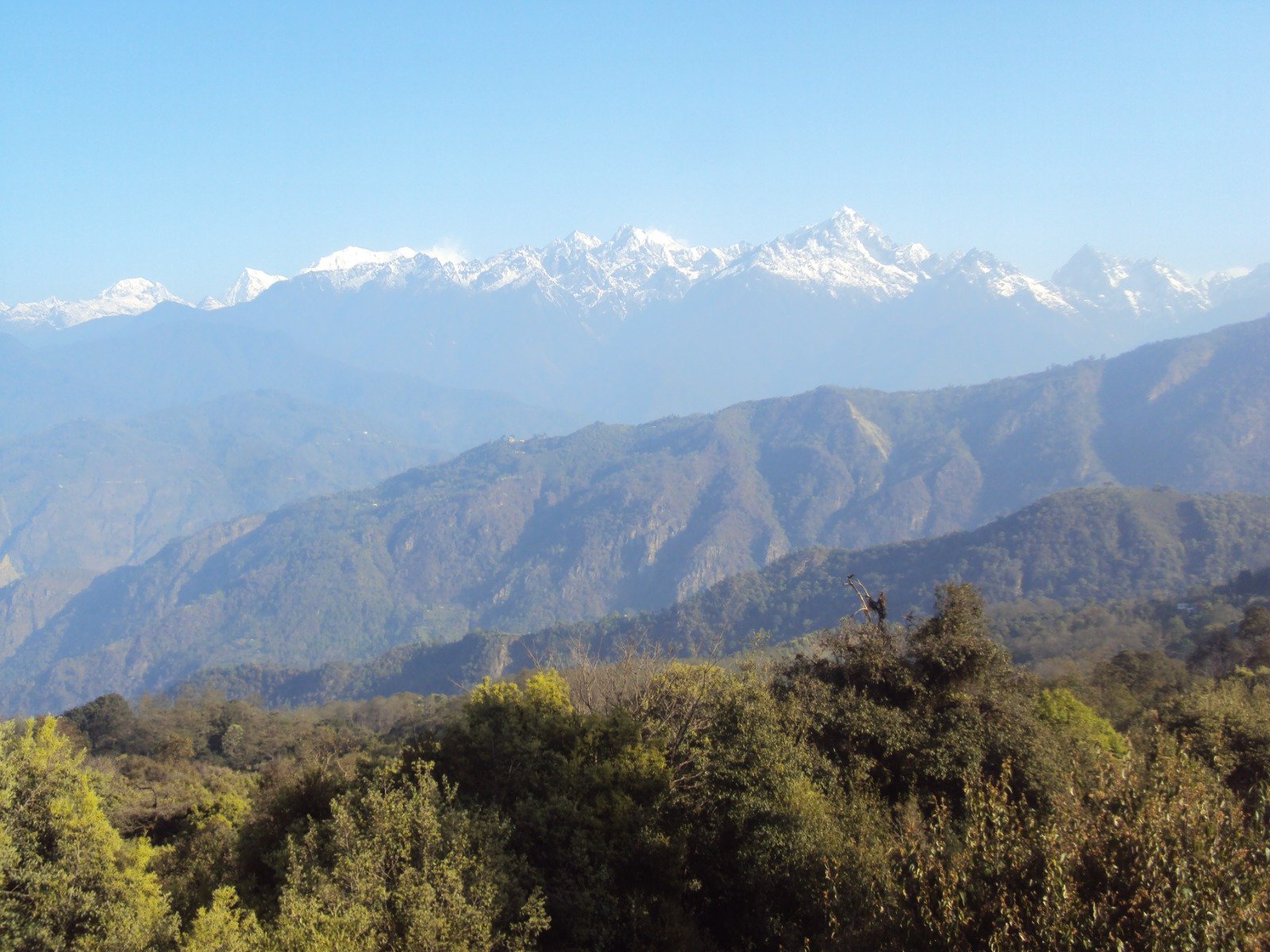
Sacred Ecology, Mountain Modernity, Missionary Representation, and European Exploration
Santanu Dey • Halina Marlewicz
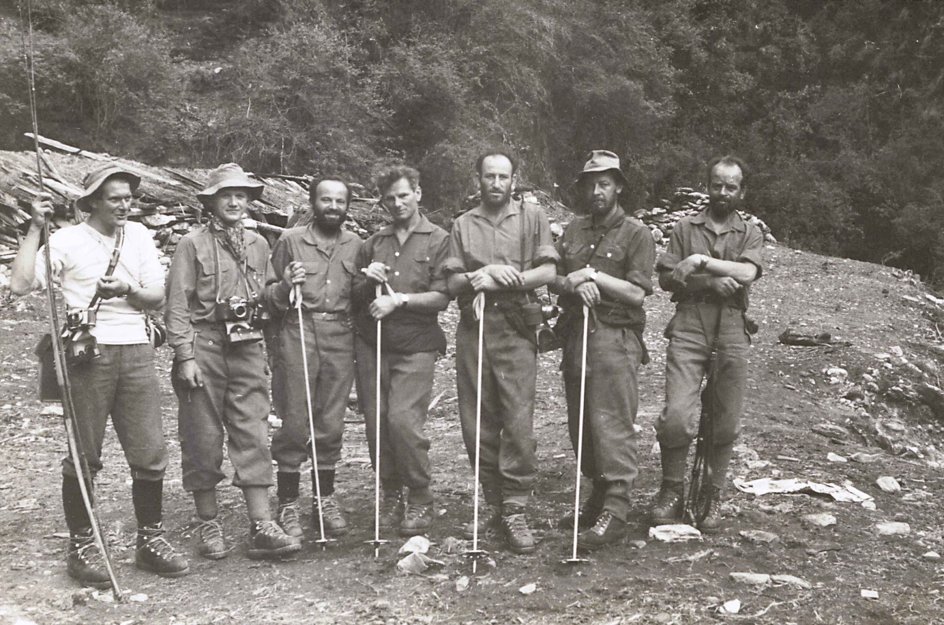
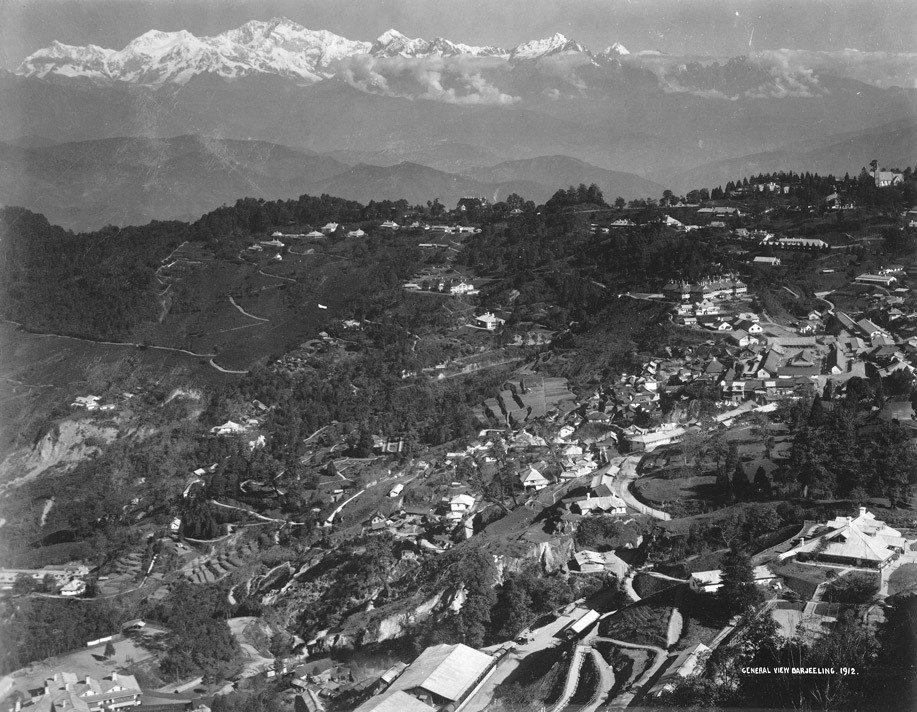
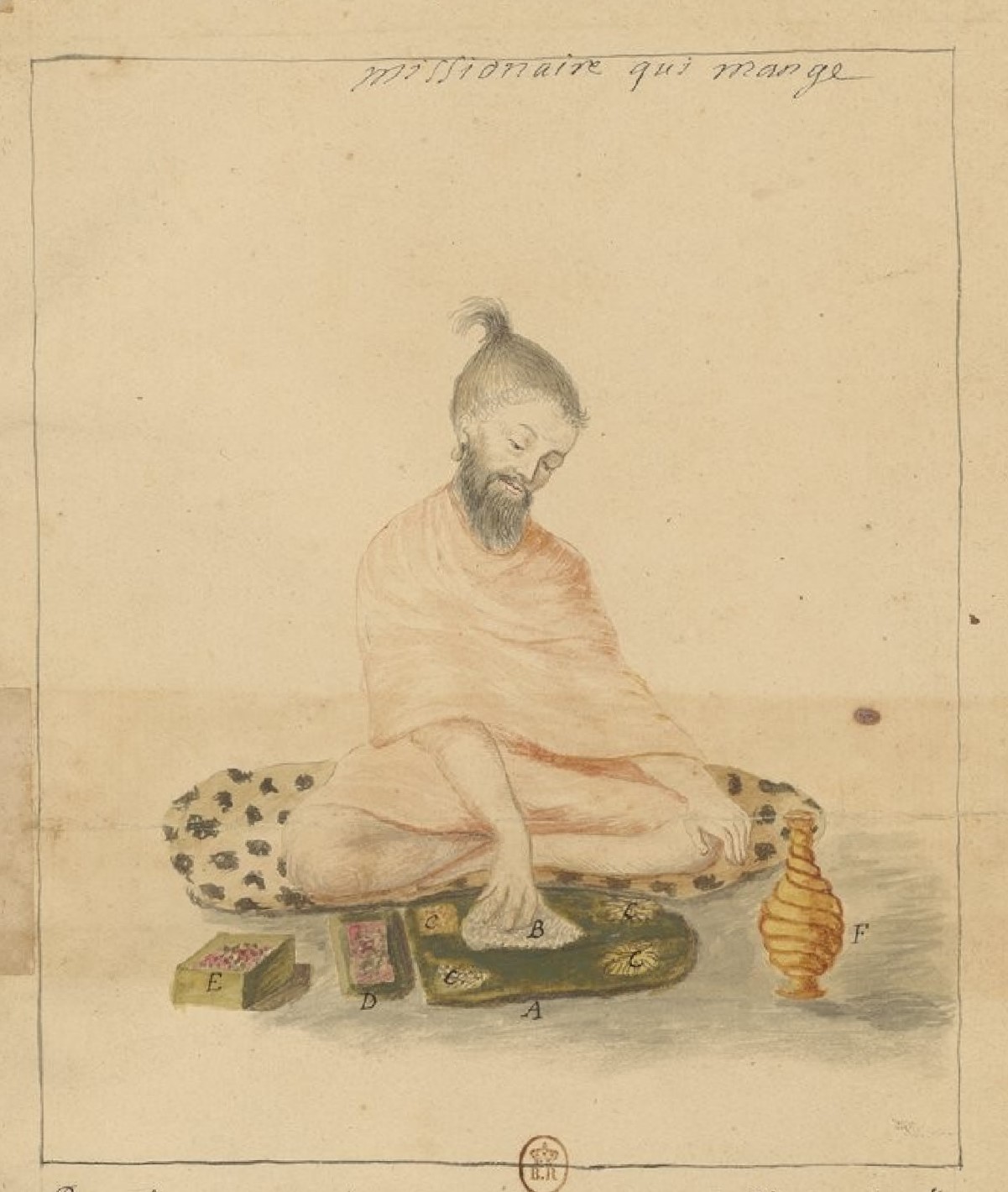
How have encounters between Europe and the Himalayas shaped the ways in which mountain landscapes, communities, and sacred traditions are imagined? This series of collective blog entries introduces the work of the ESIND research cluster Ethno-spatial and Sacred Imaginaries: Locating the Himalayas in the European Imagination. Bringing together perspectives from history, anthropology, religious studies, visual culture, environmental humanities, and mountaineering history, the contributions examine the Himalayas not simply as a geographical region, but as a cultural and intellectual space produced through texts, images, travel, colonialism, religious practice, migration, and cross-cultural encounters. Moving from Khasi sacred groves in Meghalaya, to comparisons of mountain modernity in Darjeeling and Zakopane, nineteenth-century missionary representations of Darjeeling and Sikkim, and the twentieth-century Yugoslav expeditions to the Himalayas, the essays reveal both the diversity of Himalayan imaginaries and the unequal relationships through which they have been created. Together, they invite readers to consider the perspectives of those who have shaped knowledge of the Himalayas, which voices have remained at the margins, and how alternative archives can deepen or challenge established European narratives.
The series begins in Meghalaya, where the sacred grove of Mawphlang offers a particularly illuminating example of how a landscape acquires meaning through the interaction of religious belief, ancestral memory, community governance, and environmental practice. In the contribution that follows, Srijani Bhattacharjee approaches the grove not as an isolated remnant of the past, but as a living cultural landscape whose meanings and systems of stewardship have continued to evolve through colonial and postcolonial change.
By beginning in the Khasi Hills of Meghalaya, the series adopts a flexible understanding of the broader eastern Himalayan and Northeast Indian mountain region, while remaining attentive to the distinct histories and cultural geographies of the places included
Part 1: Sacred Landscapes and Indigenous Ecologies
Indigenous Religion and Nature Preservation among the Khasis: A Case Study of the Sacred Grove of Mawphlang in Meghalaya
Srijani Bhattacharjee
Sacred Groves as Living Heritage
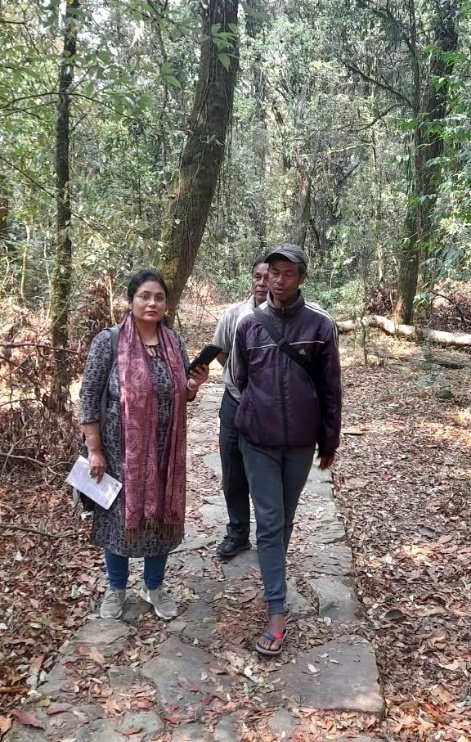
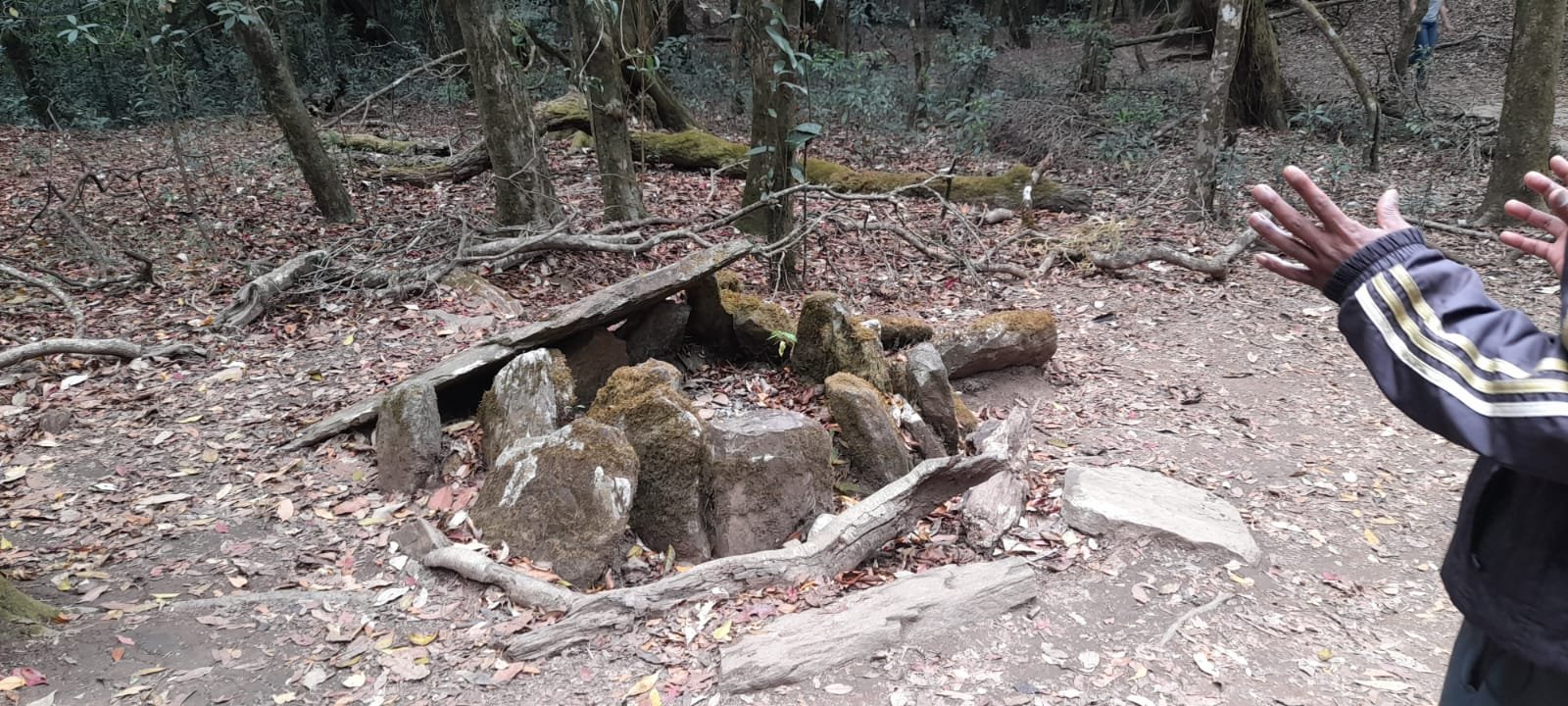
At the edge of the sacred Mawphlang grove in Meghalaya, visitors encounter ancestral monoliths and a living forest governed not only by ecological conditions, but also by ritual obligations, collective memory, and customary authority. For the Khasi community, the grove is more than a protected forest tract. It is a sacred landscape in which relationships between human beings, ancestors, spiritual agencies, and the natural world continue to be negotiated.
Sacred groves have attracted scholars from environmental history, anthropology, religious studies, and heritage studies because they bring together tangible biodiversity and intangible systems of belief and practice. Some accounts describe them as surviving relics of an ancient past; others emphasise their importance as community-based systems of environmental stewardship. The Mawphlang grove invites us to consider both perspectives while also asking how such landscapes change under colonial, religious, and social pressures
Sacred Groves in Scholarship and Colonial Forestry
Sacred groves – natural environmental abodes where a community resides and intangible nature-based religious sentiments and rituals reside – have attracted the interest of scholars from different disciplines. Although some have valued the idea of a sacred grove as a relic from the past, others see in it a valorization of biodiversity. The German forester Dietrich Brandis, the first General Inspector of Forests, is credited with identifying the phenomenon of religiously motivated forest conservation in India with the term sacred grove. In his 1897 review of indigenous forestry, he wrote: “Very little has been published about sacred groves in India, but they are, or rather were, very numerous. I have found them in all provinces…. These sacred forests, as a rule, are never touched by the axe, except when wood is needed for the repair of religious buildings or in special cases for other purposes” (Brandis, Dietrich. Indian Forestry, Oriental University Institute, Woking, United Kingdom, 1897: p.12).). Later writers (Gadgil Madhav and Vartak V.D, Sacred Groves of India: A Plea for Continued Conservation, Journal of Bombay National History Society, Volume 2, Number 2, 1975) regard sacred groves as an exemplary system of “traditional community resource management,” where natural resources held in common are conserved for the long-term benefit of the community. The environmental discourse surrounding sacred groves in India tends to represent the groves as a vanishing tradition, part of a heritage of ancient wisdom that is being eroded as the Indian society has become more industrialised, educated, materialistic, and imbricated in global networks of commerce and information. As preserved tracts of flora and fauna venerated on religious grounds, sacred groves are also an interesting feature of community heritage. In addition to their religious significance, these forested zones also contribute to the preservation of nature by protecting threatened plant and biodiversity species and protecting diverse medicinal plant varieties. Within the Indian subcontinent, sacred groves have been an integral part of indigenous cultures in states such as Madhya Pradesh, Maharashtra, Karnataka, Rajasthan, Sikkim, and parts of South India (Kent, Eliza F. 2013. Sacred Groves and Local Gods: Religion and Environmentalism in South India. New York: Oxford University Press, among others). Meghalaya has several of such forests spread across the East and West Khasi Hills, the Ri Bhoi, the Jaintia Hills, and the Garo Hills districts.
Research Approach and Sources
Drawing on archival records, historical accounts, and field visits, this essay examines the relationships between people and their environment within the conceptual frameworks of place-making and heritage studies. It explores the religious, socio-cultural, and environmental significance of sacred groves among the Khasi community in Meghalaya, tracking their development from the precolonial period to the present. It situates these sacred sites within the broader history of European intervention in and engagement with ecological systems of the region, while exploring how the colonial and post-colonial regimes have transformed them. At the same time, it considers how local communities have continued to identify over time.
This interdisciplinary study is situated at the intersection of history, cultural geography, social anthropology, and heritage studies. It approaches place-making as a collaborative process through which communities reimagine and reinvent their relationship with the places they inhabit and invest those places with shared meanings and values. In the context of the sacred grove of Mawphlang, place-making connects community beliefs with natural heritage through ritual practice, collective memory, customary authority, and environmental stewardship. At Mawphlang, with community participation at its centre, this occurs through common cultural tradition and the sense of collective responsibility to sustain the relationship between people and the landscape. (David, Bruno, and Meredith Wilson, eds. 2002. Inscribed Landscapes: Marking and Making Place. Honolulu: University of Hawaii Press).
I explore sacred groves as dynamic and interactive sites of place-making, where communities invest landscapes with cultural and religious meanings through the mediation of ritual specialists. These meanings are transmitted through oral traditions and folklore and sustained by customary rules (both positive and negative) governing access to and use of the groves. The resulting forms of Khasi indigenous intangible cultural heritage have been reshaped by religious conversion, colonial and postcolonial institutions, education, economic change, and wider processes often described as Westernisation. These effects are not uniform: some practices have declined or changed, while others continue through adaptation, customary governance, and community stewardship. By examining Khasi traditional religiosity, creation myths, sociopolitical institutions, spatial geomorphology of the sacred sites and practices of nature conservation, the essay considers how particular forested sites acquire sacred value that became the site of a community value system until the colonial period and how local communities continue to interpret, use, and protect them under changing social and religious conditions.
Mawphlang: Forest, Deity and Community
The sacred grove of Mawphlang, which occupies an area of 76.8 hectares, is located in the East Khasi Hills district of Meghalaya, a beautiful hill state located in the Northeast of India. It is a forest believed to be six to seven centuries old. It is preserved on religious grounds by the indigenous Khasi community. According to indigenous religious beliefs, nature is the bridge that connects human beings with the divine and vice versa. The Khasis believe that since humans and all living beings are a part of nature, they communicate in the same language which is mutually understandable. Therefore, nature should be preserved where all living beings have an equal share, and humans should act as custodians of divine creations on earth. Hence, the preservation of nature is an essential component of the indigenous religion known as Khasi Niam. The sacred grove of Mawphlang is believed to be the abode of the deity U Ryngkew U Basa or Labasa, who does not favour any form of human interference in the forest unless it is ritually sanctioned. It is believed that spirits with both benevolent and malevolent natures reside in the forest and are responsible for good or bad events related to human life on earth. Hence, sacrificial offerings to appease spirits are part of the sacred rituals conducted by the Lyngdoh or traditional Khasi priests. People believe that when the deity blesses the community, he takes the shape of ferocious animals, usually leopards, but when he curses men with misfortunes, he usually takes the shape of a snake. The indigenous belief of ancestor worship is also associated with the preservation of the sacred grove of Mawphlang for hundreds of years. According to the local religion, the Khasis constructed monoliths or stone structures in memory of their ancestors. Khasi Niam propagates that death does not lead to the end of life, rather death emancipates human beings from earthly bondage and makes them capable of assisting other fellow human beings on earth during calamities and epidemics. Rryngai or shadow/soul believed to reside in the forest are thought to be associated with the deceased ancestors through whom the people connect to their forefathers. Monoliths constructed in memory of the ancestors are found at the entrance of the sacred Mawphlang grove, which are believed to protect the grove from external attacks and calamities. Therefore, local folklore prescribes that permission should be sought from the monoliths before entering the grove.
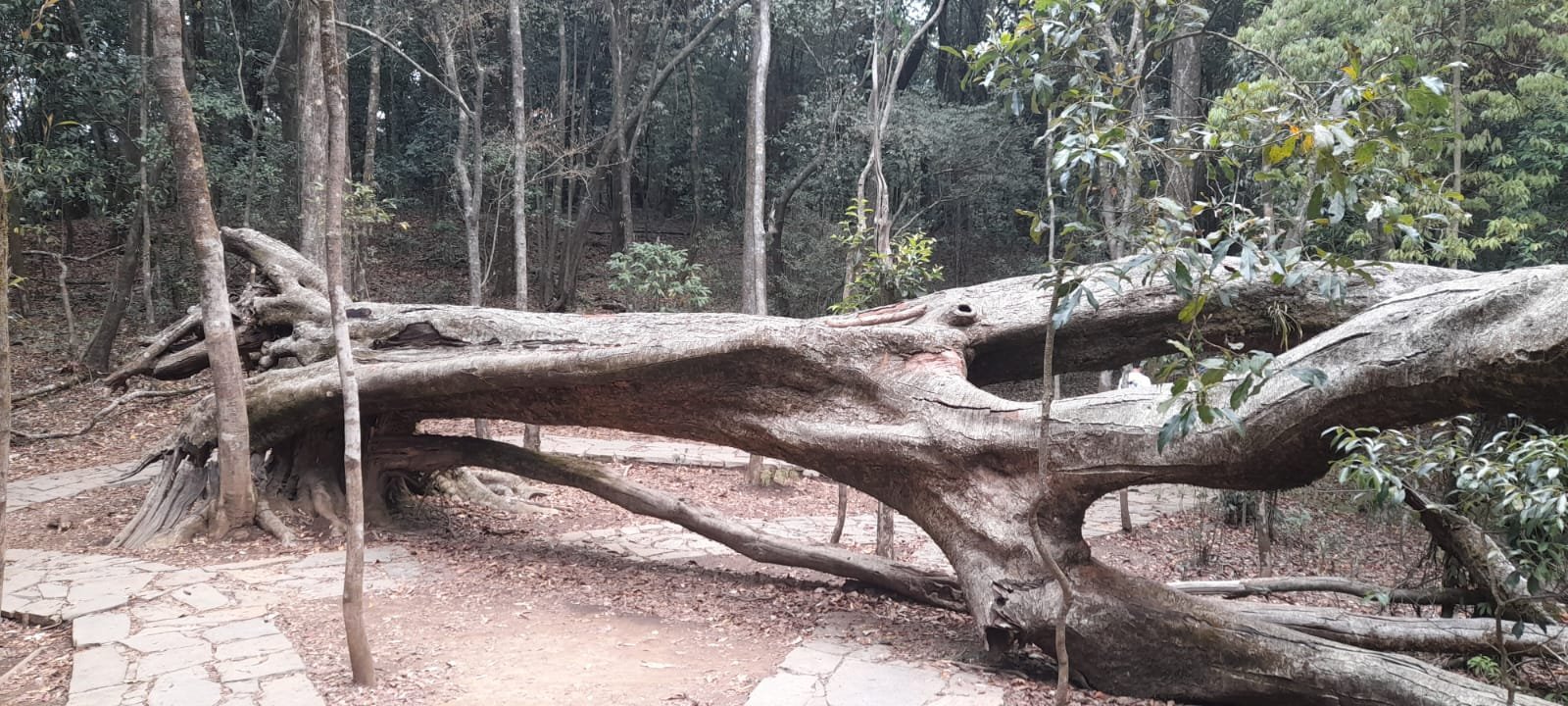
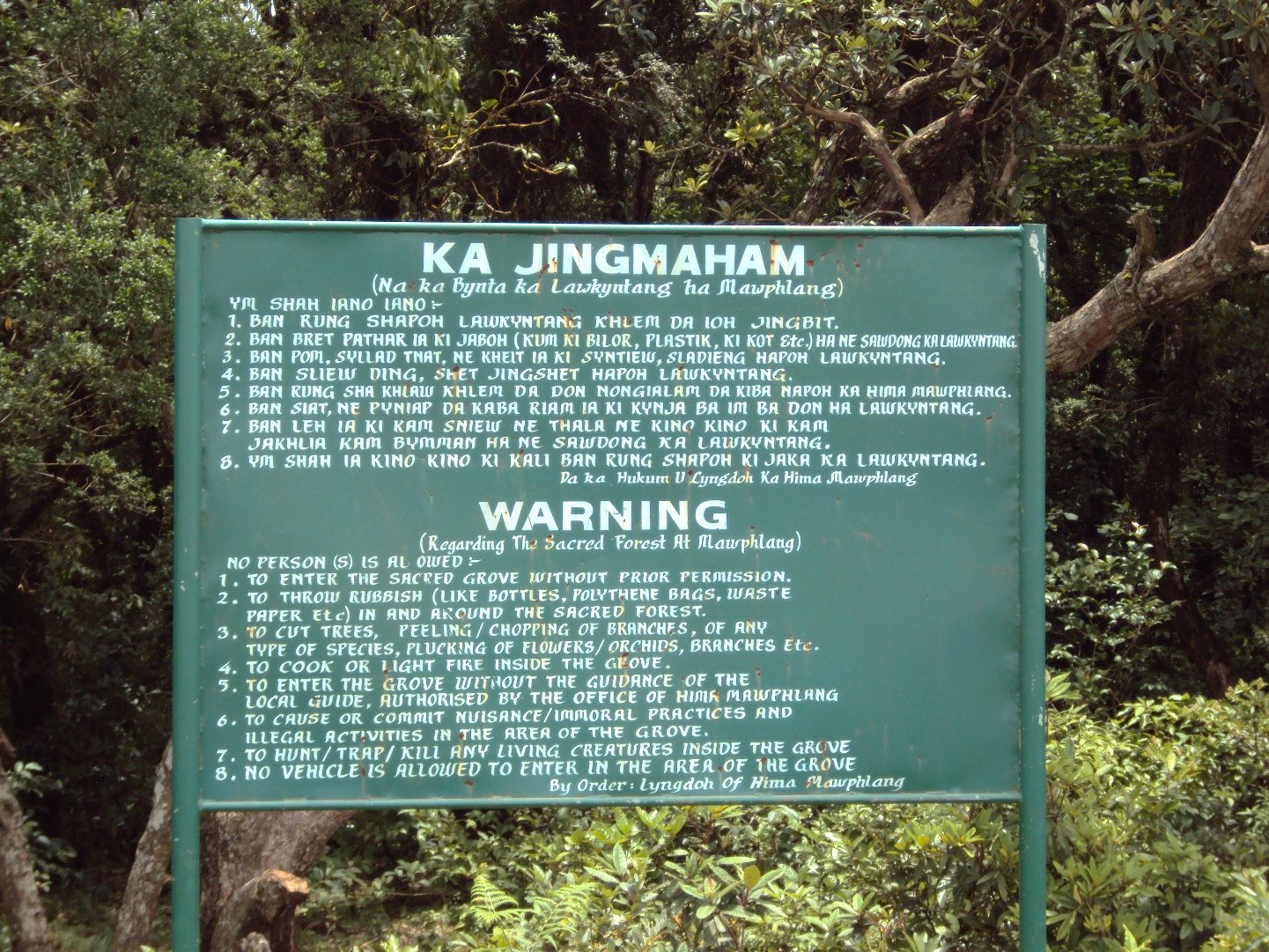
The Khasi Hills before the arrival of the British in the early nineteenth century comprised a collection of independent states or Hima. These states were brought under common supervision as a Federation of Khasi states after Indian independence. The sacred grove of Mawphlang was part of Hima Mawphlang (or the traditional state of Mawphlang) that administered the sacred grove and protected it from external attacks. The indigenous council consisting of the Lyngdoh and other associated officials in charge of local administration of the grove is part of the system of community governance. The local Lyngdoh plays an important role in preserving the Khasi religious beliefs associated with the preservation of the grove.
Thus, the sacred Mawphlang grove reveals the close interdependence of nature, religious practice, ancestral memory, and community life among the Khasi people of Meghalaya. More than a protected forest, it is a living cultural landscape in which traditional ecological knowledge, customary governance, and ritual practice continue to shape the relationships between people and their environment. Its trees, biodiversity, sacred narratives, and commemorative stones embody a heritage sustained through generations of reverence and collective responsibility. At the same time, the grove is not an unchanged survival from the past. Its contemporary significance has been shaped by religious, political, and social transformations. Mawphlang therefore offers an important lesson for current approaches to heritage preservation and ecological sustainability: environmental stewardship can be rooted not only in formal regulations, but also in cultural identity, spiritual obligation, and community-based systems of care.
Next in the series
The sacred grove of Mawphlang demonstrates how communities make places meaningful through ritual, ancestral memory, customary governance, and collective responsibility. In Part 2, the series turns to another form of place-making: the transformation of mountain settlements into modern towns through medicine, tourism, transport, migration, administration, and commerce.