Milan Jovanović Morski: India as the Land of Colossuses
By Danijela Lekić
At the time when his native country was finding her bearings after having been relatively recently set free from the fetters of the Ottoman rule, a cruise ship doctor by the name of Milan Jovanović set off for India, which at that time (late 19th century) was under the grips of the British rule. His keen sense, sharpened by the experience of Serbian struggle for freedom, navigated his perception of the situation in India and left us with some intriguing and beautiful observations in which his admiration for “the cradle of European civilization” infallibly sifts through.
Milan Jovanović was born in Jarkovac, a village in the thence Habsburg Monarchy (today, ever since 1918, part of northern Serbia), on April 12, 1834. Having finished primary school, he moved with his family to Vršac and later on to Timisoara where he finished grammar school. Funded by a rich Serbian landowner, he went to Vienna where he studied medicine, and he earned his degree in Leipzig where he defended his thesis in 1867. In 1865, he came to Belgrade, a capital of the semi-independent principality of Serbia to which many Austrian Serbs moved, where he worked as a lecturer at the Theological Seminary, the Women’s High School, Belgrade Realgymnasium, later on as a professor at the Great School (today University of Belgrade), Novi Sad Realgymnasium, and as a physician of the princely family and tutor of Prince Danilo in Cetinje.
Jovanović was the author of the first medical textbook printed in Serbia, and also a secretary of the Serbian Medical Society. As a cruise ship doctor, he traveled to Egypt, India, and China aboard Lloyd company ships in the period between 1878 and 1882; his letters from the voyages were published in a number of newspapers accompanied by his illustrations of the places; on one of these voyages, he met Ernst Haeckel. In 1890, he became a professor at the Military Academy. Upon the establishing of the Serbian Literary Guild (Serb. Srpska književna zadruga)—he was one of the founders of this prestigious publishing company which is still in existence— his travelogues were published in four books: From the Sea and the Land (1893), Here and There across the East, Book One (1894), Here and There across the East, Book Two (1895), and Up and Down around Naples (1898). Morski was also a playwright, a literary critic, a translator of Shakespeare, an editor of journals and magazines, a member of the Serbian Royal Academy (today Serbian Academy of Sciences and Arts). The speech he gave upon the acceptance into the Academy in 1892 was entitled A View on Indian drama (Serb. Pogled na indijsku dramu). His speech caused a response from the eminent critic Ljubomir Nedić, who disparaged Jovanović because he spoke about Indian drama without the knowledge of Sanskrit, which started a heated debate between them. He died in Belgrade in 1896.
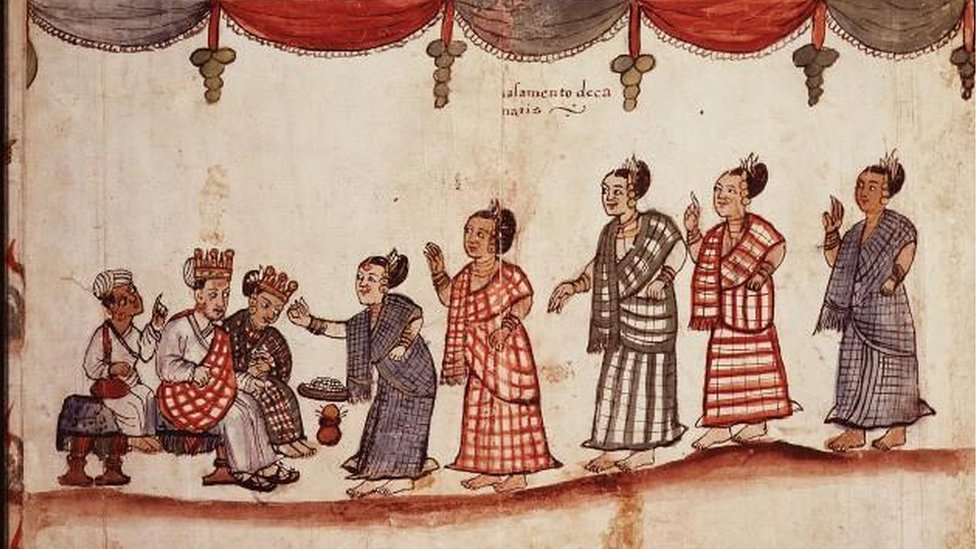
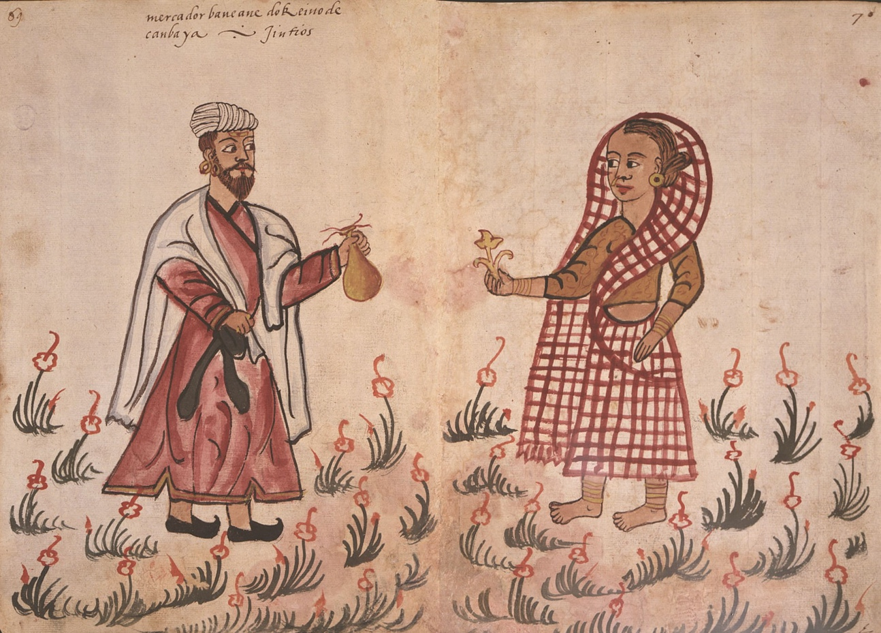
The translated passages are from the two books from his voyages to the East: Here and There across the East, Books One and Two. M. Jovanović (who got his nickname Morski, meaning ‘of the sea’ on account of his voyages) presents Indian people, customs, tradition, and architecture. He dwells on the differences which exist between the three main religious groups in Bombay, sharing at some points remarks on his personal take on the rituals and customs. He goes on to describe the women of Bombay and all the while he makes acute observations about the wealth and poverty as reflected in their garments and accessories which are in concert with their caste. This leads him conveniently to the description of the colossal nature of Indian culture which is showcased in the magnitude of their temples and shrines, in particular Elephanta Island and the pantheon in Ellora. He concludes that the greatness of their culture, when compared to the European civilization, highlights their superiority in every respect. Yet, if there is one thing which he criticizes rather harshly, it is the passive nature of the Indians, which he interprets as the main cause of their reluctance to cast off the shackles of foreign rule. However, it is the hypocritical nature of the European powers that he wishes to put the most negative emphasis on—he sees them as plunderers, who are taking advantage of the current moment of weakness and he is quite positive that it is just a matter of time when “the Mongolian and Aryan race” will come to the European door to put the pillaging to an end.